
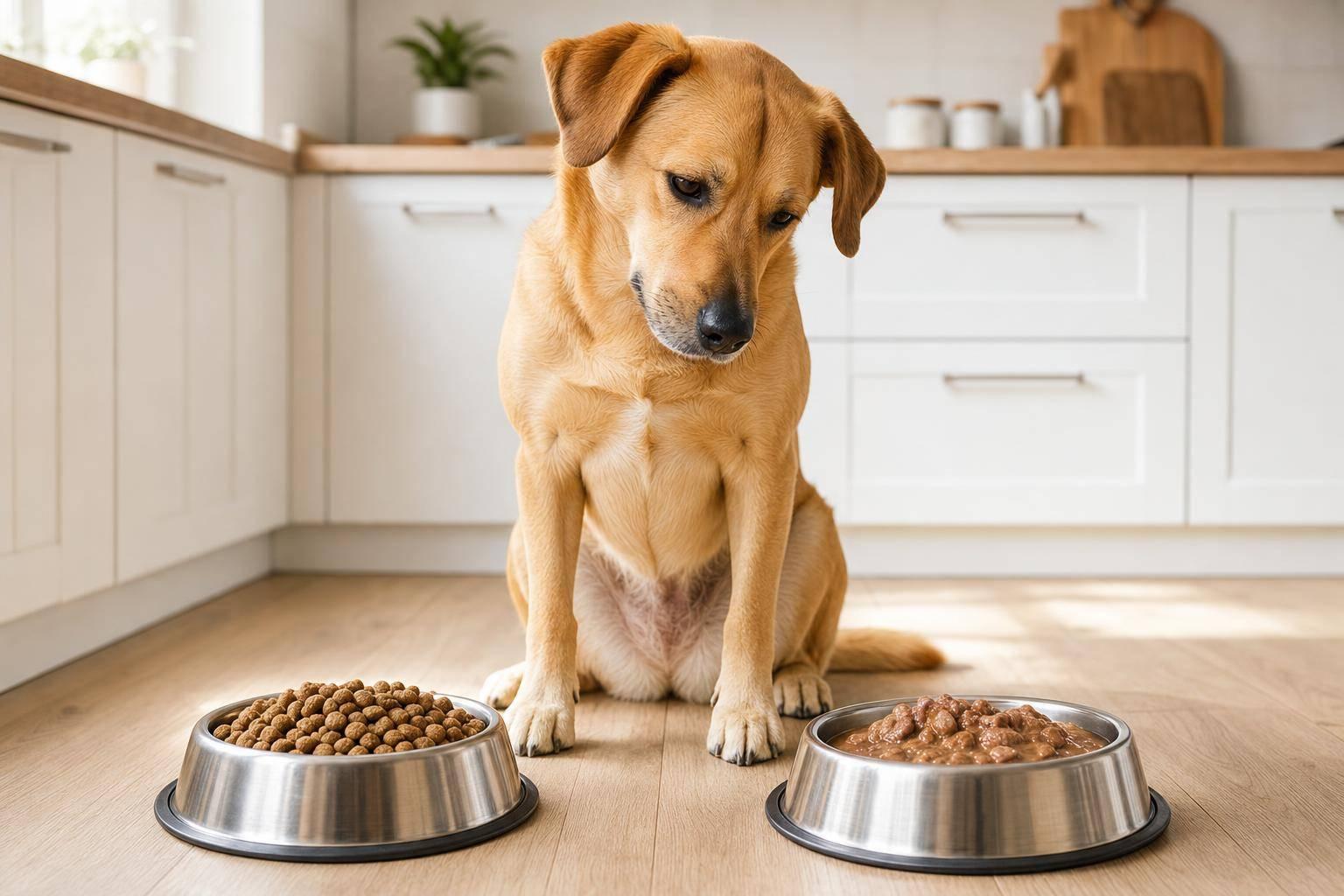
There’s no single winner: dry and wet dog food can both work well if they’re complete and balanced for your dog’s life stage.
If I had to sum it up fast, I’d say this:
- Dry food is usually lower in cost per meal, easier to store, and simpler to measure.
- Wet food gives your dog more water, is often easier to chew, and may help with picky eating.
- Mixed feeding can work too, but I’d keep an eye on total daily calories.
- The right pick depends on age, teeth, appetite, hydration needs, routine, and budget.
A few numbers matter here. Dry food usually has about 8% to 14% moisture, while wet food has much more. That changes both hydration and calorie density. So if you compare foods, I wouldn’t look at cups alone – I’d look at calories first.
If your dog is a picky eater, wet food often wins.
If you want easier storage and lower day-to-day cost, dry food often fits better.
If your dog has mouth pain, missing teeth, or needs more water, wet food or a mix may make more sense.

Dry Food vs. Wet Food for Dogs: Side-by-Side Comparison
Dry vs wet dog food – which is better?
sbb-itb-5fd1d49
Quick Comparison
| Factor | Dry Food | Wet Food |
|---|---|---|
| Moisture | Low | High |
| Cost per calorie | Lower | Higher |
| Storage | Easier | Needs refrigeration after opening |
| Portioning | Usually simpler | Needs closer calorie checks |
| Taste appeal | Often lower | Often higher |
| Chewing | Harder | Softer |
| Travel use | Easier | Less convenient |
| Good fit for | Routine feeding, lower cost, easy storage | Picky eaters, dogs needing more water, dogs with chewing trouble |
One last point: dry food does not replace tooth brushing, and wet food does not mean fewer calories by default. I’d choose based on what your dog handles best – and if your dog has a health issue, I’d check with your vet before changing food.
Dry Dog Food: Benefits and Drawbacks
Kibble usually has 8% to 14% moisture, which is a big part of why it lasts so well on the shelf. It’s easy to store, easy to scoop, and simple to portion out at mealtime. The downside is pretty plain: it has much less moisture than wet food.
Dry food is also often the lower-cost option per meal.
That said, dry food doesn’t take the place of brushing or regular dental care from your vet. It may be convenient, but it’s not a shortcut for oral hygiene.
Another thing to watch for is eating speed. Some dogs gulp kibble fast, and that can lead to digestive upset. If your dog eats like it’s in a race, a slow feeder bowl can help ease the pace.
When Dry Food Is the Right Fit
Dry food works well for dogs that do fine with measured meals, can chew kibble without trouble, and don’t need extra moisture at each feeding. Dogs that need more moisture or a softer texture are often a better match for wet food.
Wet Dog Food: Benefits and Drawbacks
Wet food has more moisture than dry food, so it can help dogs that need extra hydration. It also tends to be more appealing to picky eaters.
There’s a trade-off, though. Once opened, wet food needs refrigeration and should be used soon after. It also usually costs more per calorie than dry food. Those differences stand out most when storage space and day-to-day convenience affect how you feed your dog.
When Wet Food Fits Best
Wet food is often a good match for senior dogs with mouth pain or missing teeth that make kibble hard to chew. It also makes sense for dogs that need more moisture at mealtime.
Next, compare dry and wet food side by side for cost, convenience, and portion control.
Dry Food vs. Wet Food: Side-by-Side Comparison
Here’s the practical view of those trade-offs. The table below shows the main day-to-day differences between dry and wet dog food. These are general patterns, not hard rules, so check the label on each product.
| Factor | Dry Food | Wet Food |
|---|---|---|
| Moisture content | Low moisture | High moisture |
| Calories per cup/can | Higher per cup | Lower per same weight |
| Taste appeal | Moderate | Generally higher |
| Easier to chew | Requires more chewing | Easier to chew |
| Cost per calorie | Lower | Higher |
| Portion control | Usually easier to measure | Usually needs more attention |
| Travel convenience | More convenient | Less convenient |
How to Compare Labels and Calories
Don’t compare dry and wet food by equal cups or equal weights. Water changes the math.
Wet food has much more moisture, so the same volume will usually give your dog fewer calories. That’s why the better comparison is calories, not cups or weights.
When you’re looking at labels, choose recipes that are complete and balanced. If you’re unsure how a food fits your dog’s needs, ask your veterinarian for help with nutrition questions.
When Mixed Feeding Makes Sense
Mixed feeding can be a good middle ground. You get the easier measuring that often comes with dry food, plus the extra moisture and stronger taste that wet food can offer.
The key is simple: keep total daily calories on target.
Choosing Based on Your Dog’s Needs and Daily Routine
The best food format often comes down to your dog’s age, health, and day-to-day routine.
| Situation | Better Fit | Why |
|---|---|---|
| Picky eater | Wet food | Higher moisture and a stronger smell can help tempt dogs with selective appetites |
| Senior dog | Wet food or mixed feeding | Easier to chew and adds moisture for older dogs with mouth pain or missing teeth |
| Puppy | Dry, wet, or mixed – whichever the puppy eats best | Use a complete and balanced puppy food in the format that fits the puppy’s routine |
| Fast eater | Dry food with a slow feeder bowl | Helps slow meals and may lower the risk of digestive issues |
| Travel days | Dry food or pre-portioned mixed meals | Easier to pack, store, and portion when you’re away from home |
| Weight or hydration support | Wet food or mixed feeding | Higher moisture content and lower calorie density can help with hydration and portion control |
Use the chart to narrow your choice, then check the total calories before serving.
Mixing dry and wet food? Same deal: count calories first.
A Simple Decision Rule and Final Takeaway
Choose the format that fits your dog’s age, hydration needs, chewing comfort, and routine. If your dog has a diagnosed condition, talk to your veterinarian before changing foods.
FAQs
How do I switch my dog from dry food to wet food?
The available information doesn’t include step-by-step directions for switching a dog from dry food to wet food.
If you want help with a diet change, talk to a veterinarian or a certified pet nutritionist. They can suggest evidence-based guidance based on your dog’s health, age, and how sensitive their digestion is.
Can I mix dry and wet food at every meal?
Yes. Mixing dry and wet food at each meal is common, and it can help you balance your dog’s nutrition, water intake, and food likes.
The main thing is simple: count the calories from both foods so you don’t feed too much. If you’re not sure how much to serve, your veterinarian can help you figure out the right portions based on your dog’s age, weight, and health.
How do I calculate calories when feeding both?
First, figure out your dog’s total daily calorie needs based on life stage, weight, and activity level. Then check each food label for calorie info: kcal per cup for dry food and kcal per can or container for wet food.
Next, split that daily calorie target based on the dry-to-wet ratio you want to use. From there, divide each calorie portion by the food’s calorie density to find the amount to serve.