
“Brush your dog a few times a week” is reasonable general advice, but it glosses over a real difference: a Labrador’s double coat, a Poodle’s curly non-shedding coat, and a Wire Fox Terrier’s broken coat all shed, mat, and respond to brushing in genuinely different ways. Matching your routine to your dog’s actual coat type matters more than matching it to a generic weekly schedule. For the core toolkit itself, see our at-home grooming tools guide — this piece focuses specifically on which coat types need what, and how often.
Double Coats (Labs, Huskies, Corgis, Golden Retrievers)
A double coat has a soft, dense undercoat beneath a coarser topcoat, and it’s the undercoat that causes most of the shedding people notice. These breeds typically need brushing every 1-2 days during spring and fall shedding seasons, and 2-3 times a week the rest of the year. A slicker brush that reaches through the topcoat to the undercoat is more effective here than a brush designed only for surface hair.
Short or Smooth Coats (Beagles, Boxers, Dachshunds)
Short-coated breeds shed steadily but usually in smaller amounts than double-coated breeds, since there’s no dense undercoat to release seasonally. Once or twice a week with a slicker brush is typically enough, and sessions tend to be quick since there’s less coat to work through.
Wire or Broken Coats (Terriers, Schnauzers)
Wire coats have a coarse, textured topcoat that doesn’t mat as easily as long or curly coats but does need regular brushing to prevent the coat from becoming dull and to remove loose dead hair, since wire coats don’t shed on their own the way a double coat does. Many wire-coated breeds also benefit from professional hand-stripping periodically, which is a specialized technique beyond home brushing.
Curly or Non-Shedding Coats (Poodles, Doodles, Bichons)
These coats shed very little loose hair, but that’s exactly what makes them prone to matting — the hair that would normally fall out stays trapped in the curl instead. These coats generally need brushing every 1-2 days, ideally with a slicker brush that reaches down to the skin rather than just skimming the surface, since mats often start close to the skin and are much easier to prevent than to remove later.
Long, Silky Coats (Yorkies, Cocker Spaniels, Shih Tzus)
Long silky coats tangle easily, especially behind the ears, under the legs, and around the collar area. Daily or near-daily brushing helps prevent tangles from tightening into mats, and many owners find it easier to keep these coats trimmed shorter if daily brushing isn’t realistic.
Coat Type Brushing Guide
| Coat Type | Example Breeds | Brushing Frequency | Main Risk if Skipped |
|---|---|---|---|
| Double coat | Labs, Huskies, Corgis | Daily during shedding season, 2-3x/week otherwise | Heavy shedding, undercoat matting |
| Short/smooth | Beagles, Boxers, Dachshunds | 1-2x per week | Steady shedding, minimal matting |
| Wire/broken | Terriers, Schnauzers | 2-3x per week | Dull coat, dead hair buildup |
| Curly/non-shedding | Poodles, Doodles, Bichons | Every 1-2 days | Mats close to the skin |
| Long/silky | Yorkies, Cocker Spaniels | Daily to near-daily | Tangles behind ears, legs, collar |
The Right Brush Still Matters More Than the Schedule
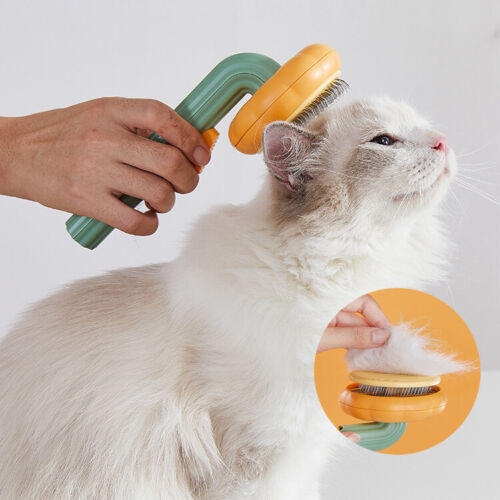
A self-cleaning slicker brush works across most of the coat types above, since fine, closely spaced bristles handle both undercoat removal and surface detangling. Its retractable-bristle design also matters more for high-shedding coat types, where you’d otherwise be pulling accumulated fur out by hand mid-session. For the nail and ear side of grooming, our full grooming tools guide covers the grooming tool set and low-noise dryer in more depth, both of which apply regardless of coat type.
Frequently Asked Questions
My dog is a mix — how do I know which category applies?
Go by what the coat actually does rather than the breed label: if it sheds heavily in clumps seasonally, treat it like a double coat; if it barely sheds but tangles, treat it like a curly coat, and adjust from there.
Should I ever shave a double-coated dog to reduce shedding?
Most groomers and vets advise against shaving double coats, since the undercoat helps regulate body temperature and can grow back unevenly. Regular brushing is the recommended way to manage shedding instead.
My curly-coated dog’s mats keep coming back even though I brush regularly — what am I missing?
Mats often start closer to the skin than people brush, especially behind the ears and under the legs. Going slower and working in smaller sections closer to the skin, rather than only brushing the visible surface, usually catches them earlier.