
Professional grooming appointments add up fast, and not every dog or cat tolerates the car ride, the noise, or the wait. The good news is that most routine grooming — brushing, nail trims, ear checks, and drying after a bath — is something you can handle at home with the right tools and a little consistency. The trick is knowing which tools actually earn a place in your routine, and which ones end up in a drawer after week two.
This guide walks through the core at-home grooming toolkit, how each piece fits into a real routine, and when it’s time to hand things over to a professional groomer or your vet instead.
Why At-Home Grooming Is Worth Building Into Your Routine
Regular brushing does more than keep fur off your couch. It helps distribute natural skin oils, catches mats and tangles before they get painful to remove, and gives you a low-stress moment to check your pet over for anything unusual — a new lump, a hot spot, ticks after a walk, or overgrown nails. For multi-pet households, a consistent grooming routine also cuts down on shedding season chaos.
None of this replaces veterinary care. Think of at-home grooming as maintenance between the appointments that matter — annual checkups, vaccinations, and anything involving your pet’s health that’s outside your expertise.
The At-Home Grooming Toolkit
You don’t need a professional-grade setup to groom effectively at home. Three categories of tools cover almost everything a typical dog or cat needs: a good brush, a set of hands-on tools for nails and ears, and a way to dry a wet coat safely.
1. A Slicker Brush for Everyday Coat Care
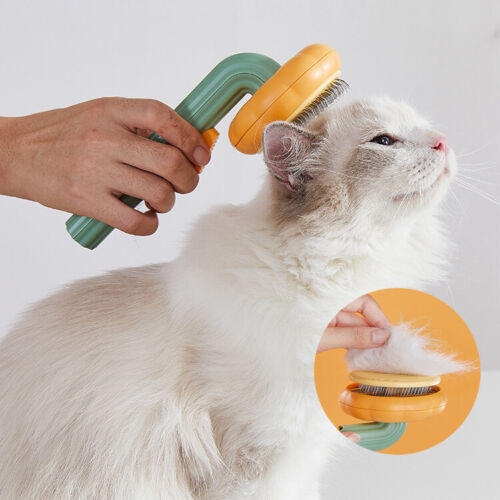
A slicker brush is the workhorse of any grooming routine — fine, closely spaced wire bristles that pull loose undercoat and light tangles out without digging into the skin. The Self-Cleaning Slicker Brush for Dogs & Cats is designed to be used across species, which is useful if you’re grooming both a dog and a cat in the same household. Its retractable bristles mean you can push a button to release the collected fur into the trash instead of pulling it out by hand between strokes — a small feature that makes you far more likely to actually use it regularly.
For most short- to medium-coated dogs and cats, two to three short brushing sessions a week is enough to stay ahead of shedding. Double-coated breeds and long-haired cats generally need brushing every day or two, especially during seasonal shedding.
2. A Grooming Tool Set for Nails, Ears, and Finishing Touches
Brushing handles the coat, but a full grooming routine also covers nail trims, ear cleaning, and general tidy-up — the parts most people are least confident doing themselves. The Pet Grooming Tool Set for Dogs bundles the basics into one kit so you’re not hunting for separate tools every time. Having everything in one place also makes it easier to build a habit, since the barrier to “just doing a quick nail check” drops when the clipper is already sitting next to the brush.
Nail trims are worth doing gradually — trimming just the tip every couple of weeks is safer and less stressful than trying to take off a lot at once, especially if your dog or cat isn’t used to having their paws handled. If you’re ever unsure how much to trim or notice bleeding, redness, or an odor from the ears, stop and check with your vet rather than continuing on your own.
3. A Low-Noise Dryer for Bath Days
Bath day is where a lot of at-home grooming routines fall apart, mostly because standard human hair dryers run hot and loud enough to spook most pets. The Low-Noise 300W Pet Hair Dryer for Dogs & Cats is built specifically for this — quieter operation and gentler airflow designed for pet coats rather than human hair, which matters for anxious pets and for breeds with a dense undercoat that takes a while to dry through.
Letting a heavy coat air-dry in a cold house, or skipping the dry entirely, can leave dogs and cats damp for hours, which isn’t comfortable for them. A dedicated pet dryer combined with a slicker brush — brushing while drying — also helps prevent mats from forming as the coat dries.
Building a Simple At-Home Grooming Routine
You don’t need a rigid schedule, but having a loose rhythm makes grooming much easier to keep up with:
- 2-3x per week: A quick brush-through with the slicker brush, plus a fast visual check of ears, eyes, and paws.
- Every 2-3 weeks: Nail trim, and a closer look at ears for wax buildup or odor.
- As needed (bath time): Bathe, then dry thoroughly with a pet-safe dryer while brushing out the coat.
- Ongoing: Use grooming sessions as a chance to feel for lumps, ticks, mats, or skin irritation you might not notice otherwise.
If your dog or cat is new to being handled this way, keep the first few sessions short and low-pressure — a couple of minutes with the brush and a treat afterward goes a long way toward making grooming something they tolerate rather than dread.
When to Call a Professional Groomer or Vet Instead
At-home tools cover routine maintenance well, but some situations call for more experienced hands:
- Mats that are tight against the skin and won’t brush out — pulling on these can hurt your pet, and a groomer has tools to remove them safely.
- Nail trims if your pet has dark nails and you can’t see where the quick is, or if a previous trim caused bleeding you weren’t prepared for.
- Any redness, swelling, discharge, strong odor, or apparent pain around the ears, skin, or paws — these are worth a vet visit, not a grooming fix.
- Breed-specific cuts (like hand-stripping or scissor work) that go beyond basic brushing and trimming.
FAQ: At-Home Pet Grooming
How often should I brush my dog or cat?
Most short-coated pets do well with two to three brushing sessions a week. Long-haired or double-coated breeds usually need brushing every day or two, especially during shedding season.
Can I use the same grooming tools for both my dog and my cat?
Many tools, like a slicker brush, are designed for use across species. Just check the specific product for size or coat-type guidance before using it on both pets.
Is it safe to trim my pet’s nails at home?
For most pets, trimming just the tip of the nail every couple of weeks is manageable at home. If you’re unsure where to cut, your pet has dark nails you can’t see through, or a previous trim caused bleeding, it’s safer to have a groomer or vet handle it.
My pet hates being brushed. What should I do?
Start with very short sessions — a minute or two — and pair them with treats or praise. Gradually increase the time as your pet gets more comfortable. If they consistently show signs of pain or distress rather than just mild dislike, mention it to your vet, since that can sometimes point to a skin issue underneath.
Building Your At-Home Grooming Kit
A slicker brush, a basic grooming tool set, and a pet-safe dryer cover the vast majority of routine grooming needs for dogs and cats. Start with whichever piece addresses your biggest current gap — brushing if shedding is the issue, a tool set if nail trims keep getting put off, or a dryer if bath days are a struggle — and build the rest of the routine around it. You can browse the full lineup of grooming tools in the Grooming category at PawNest.