
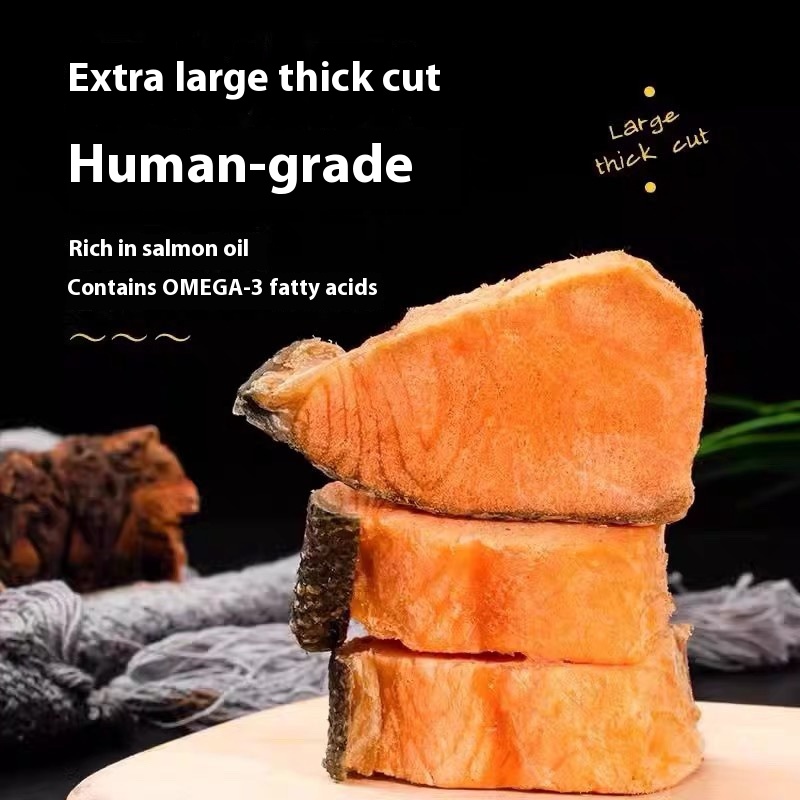
“Freeze-dried” shows up on a lot of treat packaging, often next to “dehydrated” and “jerky” as if the three were interchangeable. They’re not, and the difference matters more than it looks — it affects texture, shelf life, and how much of the original nutrition survives processing. For background on keeping any of these fresh once opened, see our treat storage guide; this post focuses on what freeze-drying itself does, using salmon and krill treats as concrete examples.
What Freeze-Drying Actually Does
Freeze-drying removes moisture by freezing the food solid, then using a vacuum to let the ice sublimate directly into vapor — skipping the liquid stage entirely. Because the process happens at low temperature rather than with sustained heat, it preserves more of the original protein structure, flavor, and nutrients than heat-based dehydrating does. The tradeoff is texture: freeze-dried treats are light, brittle, and airy rather than chewy, since the process leaves the original cell structure mostly intact but empty of moisture.
Salmon-Based Treats for Dogs
A freeze-dried salmon block is typically a single-ingredient treat — just salmon, with nothing added. That matters for two practical reasons: it’s an easier option for dogs with food sensitivities where a long ingredient list is a liability, and the fish retains its natural oil content, which is where most of the omega-3 fatty acids live. A large, thick-cut block also does double duty as a longer-lasting chew rather than a treat that disappears in one bite.
Krill-Based Treats for Cats
Krill shows up less often than salmon or tuna in cat treats, but it has a strong reputation for palatability — cats tend to respond to its stronger, more concentrated scent even in small pieces. Freeze-dried krill treats are a useful option for cats who turn their nose up at milder fish or poultry treats, and like salmon, krill carries a meaningful amount of omega-3s in its natural oils.
Freeze-Dried vs. Dehydrated vs. Jerky
| Type | Process | Texture | Shelf Life (unopened) |
|---|---|---|---|
| Freeze-dried | Frozen, then moisture removed via vacuum | Light, crisp, brittle | Longest — often a year or more |
| Dehydrated | Low, sustained heat over several hours | Chewy, leathery | Long, but shorter than freeze-dried |
| Jerky | Heat-dried, sometimes with added marinade/seasoning | Firm, chewy | Moderate — depends on added ingredients |
How to Introduce a New Freeze-Dried Treat
Because freeze-dried treats are often single-ingredient and calorie-dense relative to their size, start with a smaller piece than you’d expect, especially for a small dog or cat trying it for the first time. Watch for the usual signs of a new-food reaction — loose stool or excessive scratching — over the following day or two, the same as introducing any new protein source. For general criteria on picking treats beyond format, see our healthy treats guide.
Frequently Asked Questions
Do freeze-dried treats need to be rehydrated before serving?
No, they’re meant to be fed as-is. Some owners soften pieces in warm water for very young, senior, or dental-sensitive pets, but it isn’t required.
Are freeze-dried treats more expensive than other treat types?
Often yes, since the process is slower and more energy-intensive than simple dehydrating. The tradeoff is a single-ingredient product with less processing and a longer shelf life.
Can freeze-dried salmon or krill treats replace a meal?
No — they’re treats, not a balanced meal replacement, and should stay a supplement to a complete diet rather than a substitute for one.